Chang M. Yun

PhD Candidate, Stanford University
MPhil, University of Cambridge
BSc, Columbia University
Contact: chang.m.yun [at] stanford [dot] edu
Current projects:
ENCODE GRAMMAR (Genomic Regulatory Atlas of sequence Models, Motifs, Annotations and Rules): A deep learning model resource for decoding the DNA sequence logic of regulatory elements in the human genome
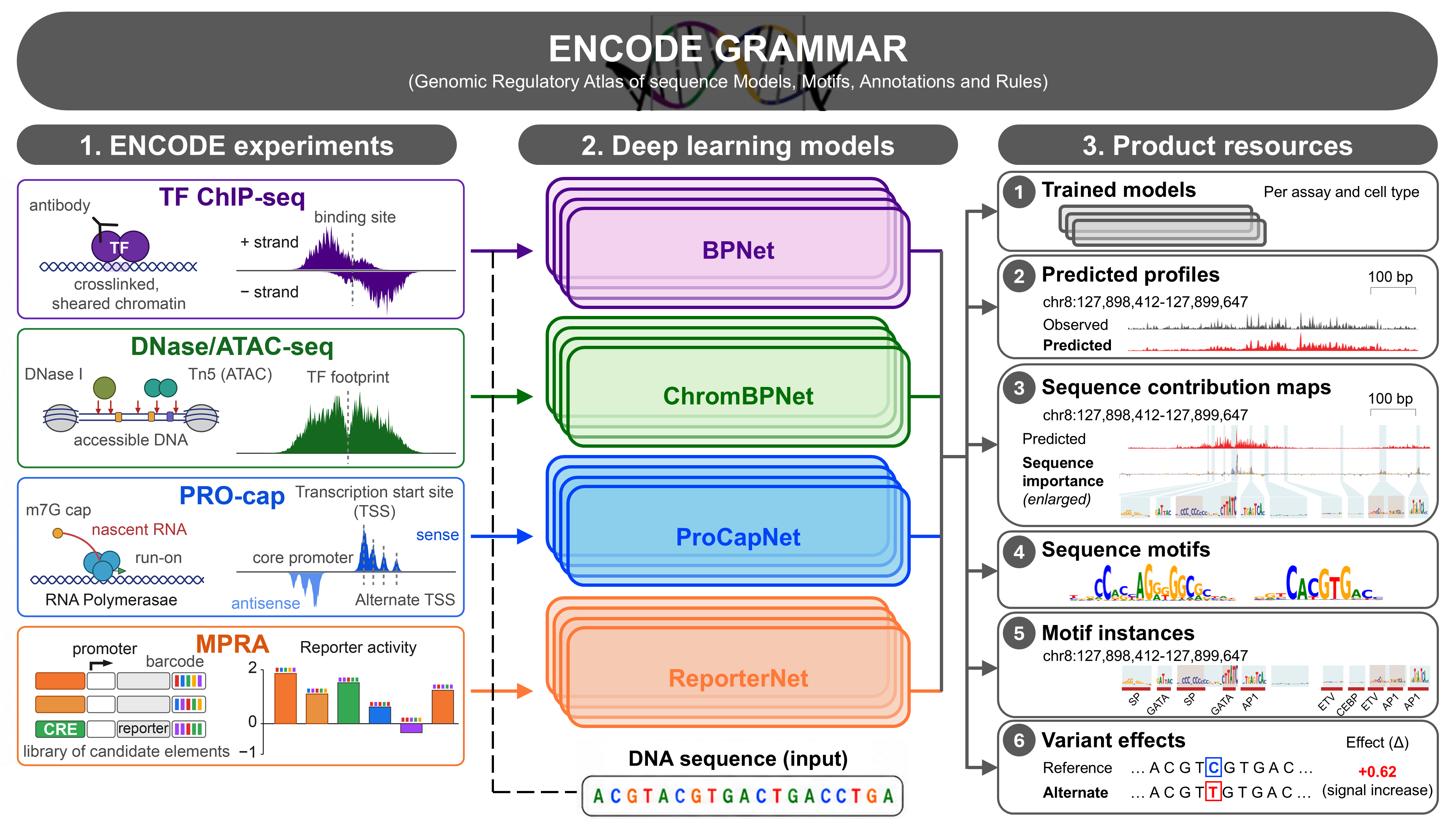 Figure: ENCODE GRAMMAR: A collection of 3,865 regulatory DNA seq2func models trained on TF binding, chromatin accessibility, transcription initiation, and reporter assays across ENCODE, each with full model predictions and interpretations.
- Note: GenomicsxAI
- Main ENCODE 4 Preprint: bioRxiv
- Technical Note: Zenodo
- User-friendly resources:
- Models: Hugging Face
- Tracks: UCSC Genome Browser
- All resources: ENCODE Portal
A unified lexicon of predictive DNA sequence motifs from ENCODE transcription factor binding and chromatin accessibility assays
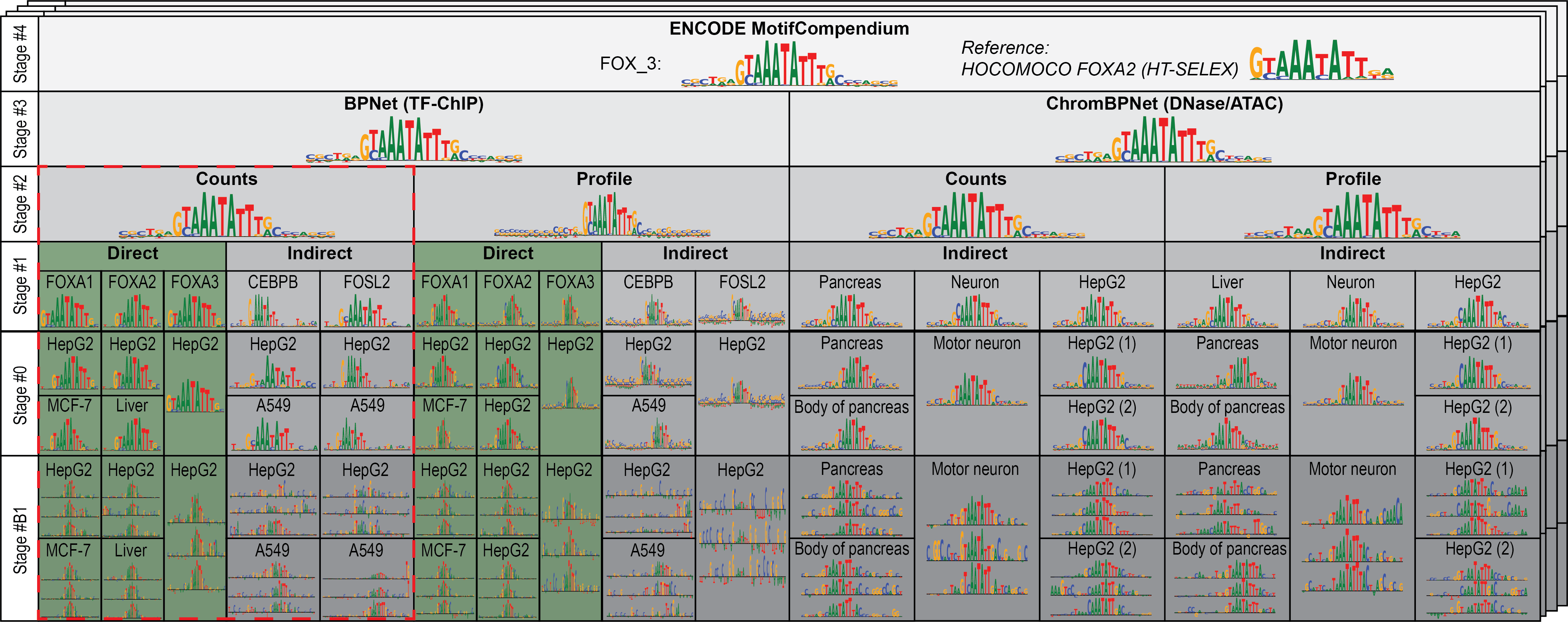
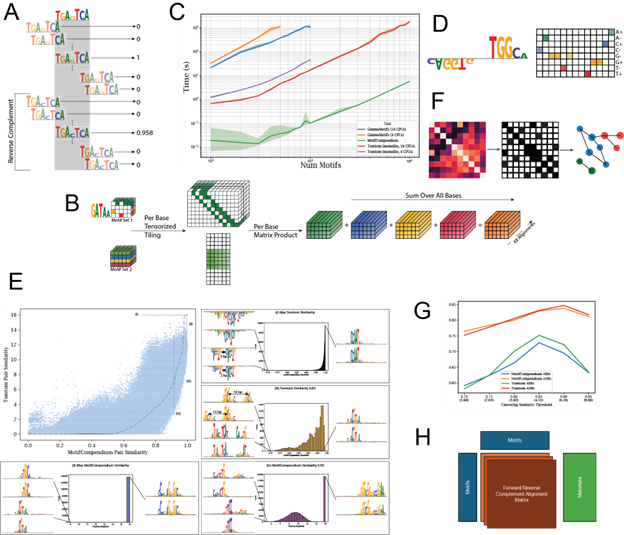 Figure: MotifCompendium: A GPU-accelerated Python package for clustering, annotating, and managing motifs, at scale. Across ENCODE GRAMMAR, we collapsed 286,836 deep learning contribution-based motifs into a single, non-redundant set of 3,384 unique motif patterns that capture TF binding and chromatin accessibility activity.
- Technical Note: Zenodo
- GitHub: MotifCompendium
JASPAR 2026: expansion of transcription factor binding profiles and integration of deep learning models
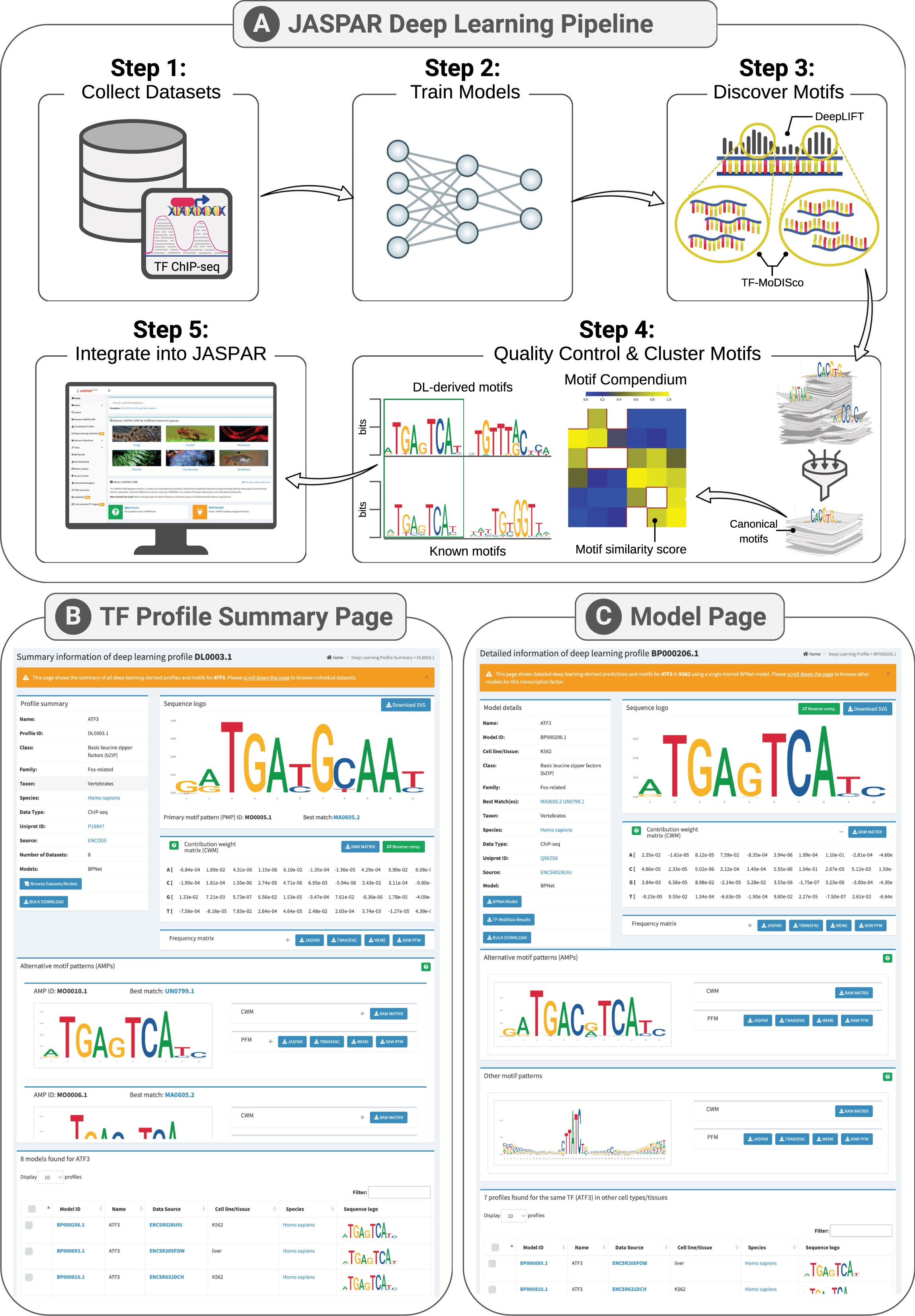 Figure: JASPAR 2026: Deep learning collection: Characterizes TF–DNA interactions with 1,259 BPNet models trained on Homo sapiens ENCODE chromatin immunoprecipitation followed by sequencing (ChIP-seq) datasets from 240 TFs and interpreted to reveal predictive motif patterns for the models. The motifs associated with the same TF were clustered to provide a summary of the binding properties, resulting in 240 primary and 113 alternative motif patterns in the DL collection. The top panel illustrates the comprehensive workflow. The bottom panels present screenshots of the TF summary profile page (left) and the model page (right).
- Publication: Nucleic Acids Research
- JASPAR 2026: JASPAR: DL
Past projects:
Designing de novo bacterial toxin-antitoxins using a generative genomic foundation model
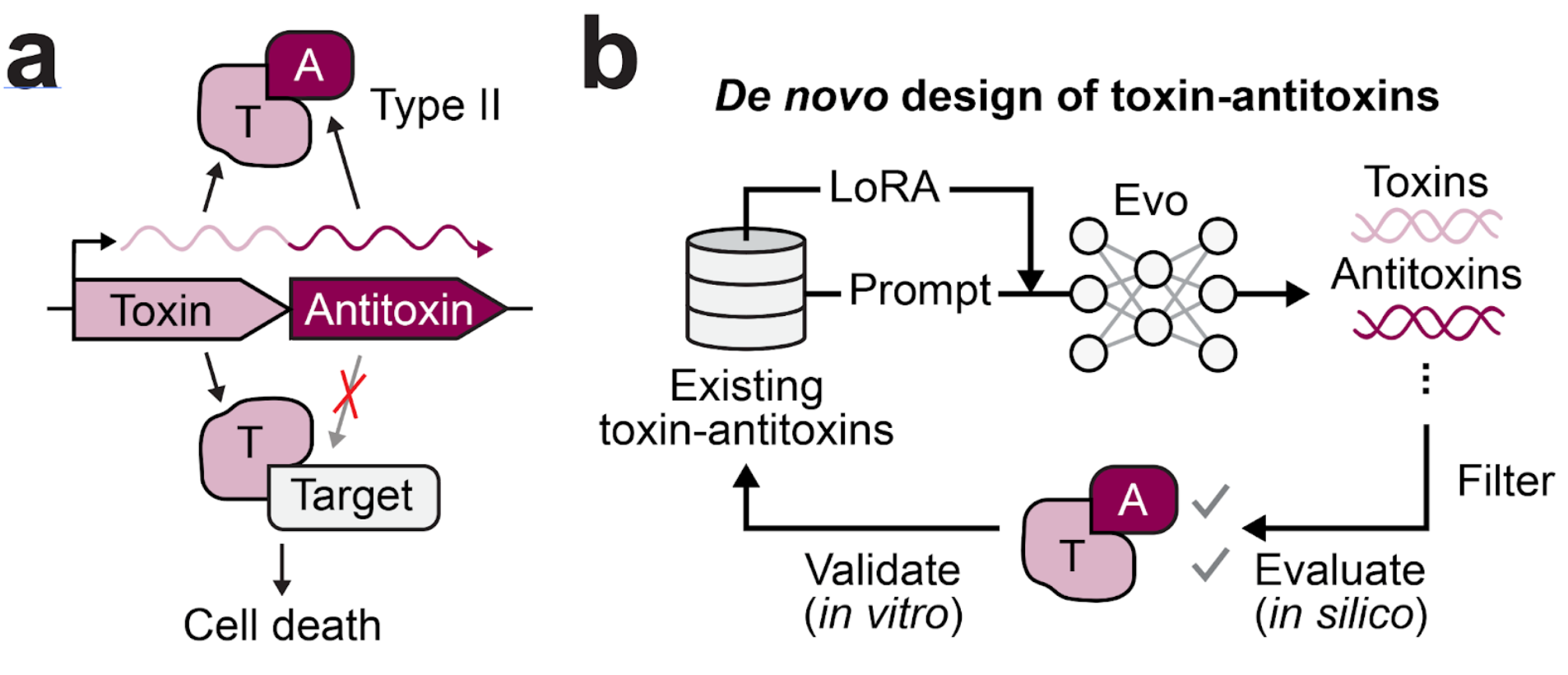 Figure: Strategy for de novo design of Type II toxin-antitoxins using a genomic foundation model. (a) Mechanism of Type II toxin-antitoxins. (b) High-level overview of the strategy for designing novel Type II toxin-antitoxins to expand the existing repertoire.
- GitHub: Evo-TA
Predicting post-transcriptional ADAR activity using a language model
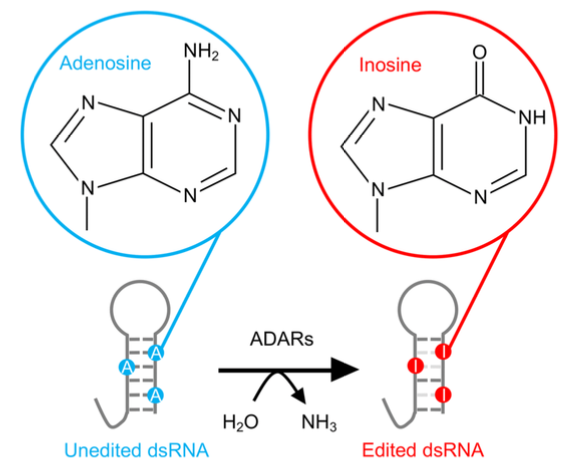 Figure: Adenosine Deadmidase acting on RNA (ADAR) activity.
- GitHub: ADAR-LM