Chang M. Yun
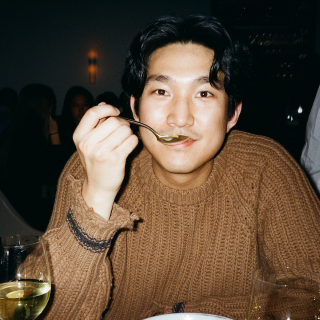
PhD Candidate, Stanford University
MPhil, University of Cambridge
BSc, Columbia University
Contact: chang.m.yun [at] stanford [dot] edu
Bio:
I am a PhD candidate in Chemical Engineering at Stanford University.
I am advised by Anshul Kundaje in Computer Science & Genetics, and co-advised by Brian Hie in Chemical Engineering & Data Science.
My interest is in all things DNA 🧬, proteins 🧪, and engineering 🤖.
My current research focuses on understanding the interface of DNA and proteins at molecular-scale using deep learning methods.
Previously, I worked in management consulting at Bain & Company as an Associate Consultant in the pharma, healthcare & med tech practice.
For my Master’s degree, I studied Biotechnology at the University of Cambridge, advised by Graham Christie, investigating in engineering bacterial endospores for DNA data storage.
For my undergraduate degree, I studied Chemical Engineering at Columbia University, advised by Ponisseril Somasundaran, investigating electrocatalytic reduction of CO2 using non-toxic, earth-abundant metals. I was an Egleston Scholar in the Fu Foundation School of Engineering and Applied Sciences.
My other interests include craft beers 🍺, oil painting 🎨 and skiing ⛷️.